Integration & Open Data
Existing IoT integration capabilities ready for enterprise delivery
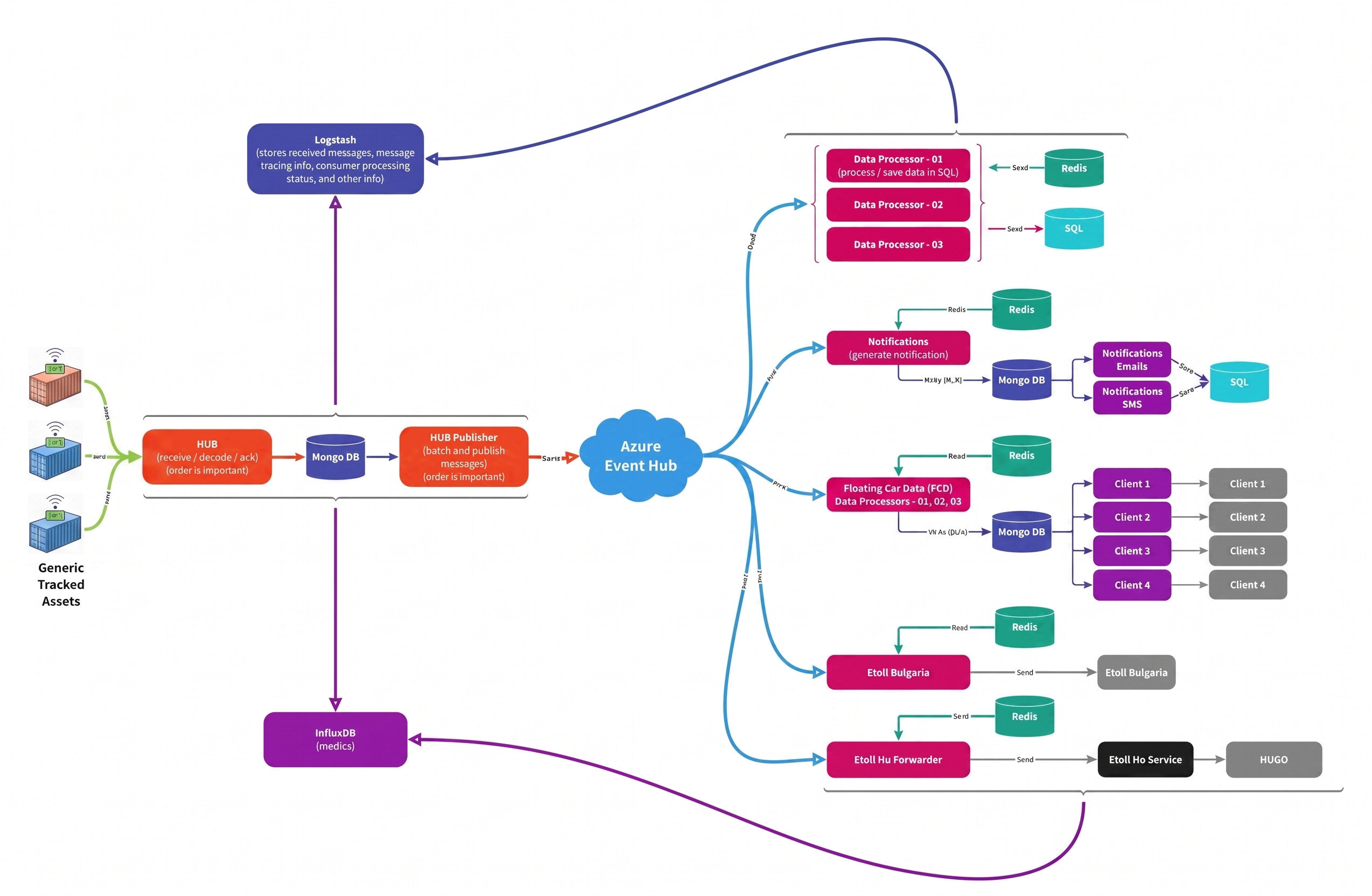
Beyond device connectivity, TrackGPS already operates the ingestion, processing, normalization, and enterprise
delivery layer required to turn field events into client-ready data.
Ordered Ingestion
Receive, acknowledge, and control device event flow from the field layer.
Processing & Normalization
Decode, enrich, route, and persist asset data into the existing platform backbone.
Enterprise Integration
Deliver structured outputs through existing client-facing interfaces and service paths.
Portable Data Model
Support reusable outputs across Coca-Cola and bottler-side environments.
What Already Exists Today
This is not a greenfield integration model.
TrackGPS already has the operational backend and service logic required to receive device-originated data,
process it, and deliver it onward through enterprise integration paths.
.NET Full Framework ingestion and processing layer already used in production operations.
Hybrid infrastructure model using Azure Event Hub for scalable event routing and downstream distribution.
Existing HUB and IoT processing backbone for ordered message handling and downstream routing.
Established platform logic for normalization, persistence, mapping, and client-specific delivery.
Integrator model already positioned between device data capture and enterprise consumption systems.
Open Delivery Methods Already Supported
Client-facing integration interfaces are already part of the current operating model.
TrackGPS can adapt device and platform data into established enterprise delivery methods, making the output
portable rather than locked into a single device ecosystem.
FTP
File-based enterprise delivery for scheduled downstream consumption.
Kafka
Streaming-oriented integration path for event-driven consumption models.
JSON APIs
Structured service delivery for application-level integration and data exchange.
SOAP Connectivity
Compatibility with enterprise systems still using service-based legacy interfaces.
TrackGPS Positioning
TrackGPS acts as the orchestration layer between device-originated data and enterprise consumption systems, reducing integration risk while keeping the data model open and portable.
Tracked Asset
Recovery device sends event and status data
→
Connectivity & HUB
Ordered ingestion, acknowledgement, message control
→
TrackGPS IoT Processing
Decode, normalize, enrich, route, persist
→
Client Delivery Layer
Open outputs for enterprise integration and downstream use
Core Backend Stack
.NET Full Framework supports the current ingestion and processing layer used for operational delivery.
Open Delivery Methods
Existing integration methods include FTP, Kafka, JSON-based delivery, and SOAP-based system connectivity.
Portable Data Model
Data can be structured for export and reuse, supporting portable integration into Coca-Cola and bottler-side environments.
Integrator Positioning
TrackGPS sits at the orchestration layer between device-originated data and client-specific enterprise consumption paths.