TrackGPS by AROBS
TrackGPS by AROBS
Confidential - For Discussion Purposes Only
01 / 15
Asset Recovery Proposal

Asset Recovery Proposal for Coca-Cola Global Equipment Platform

Device options, data architecture, and pilot path for global equipment recovery, presented with a transparent commercial and technical view for board-level evaluation.

Prepared By TrackGPS by AROBS
Format Technical + Commercial Proposal
Date June 2026
01
Recovery-First Scope
The proposal is centered on equipment recovery, location visibility, battery life, and low-touch field operations.
02
Transparent Option Comparison
Each solution will be presented on the same structure, with consistent pricing logic.
03
Pilot-to-Scale View
The presentation is designed to support a 100-unit pilot decision while showing clear indicative pricing at 1,000 and 10,000 units.
(c) 2026 TrackGPS by AROBS Board Proposal Draft
Coca-Cola Global Equipment Platform
TrackGPS by AROBS
TrackGPS by AROBS
Confidential - For Discussion Purposes Only
02 / 15
Executive Summary

Focused on equipment recovery with a transparent option review path

This proposal addresses the immediate recovery use case first, with a structured comparison of up to four device options against the operating requirements that matter most for Coca-Cola and its bottlers.

Business Need

Phase 1 is location recovery, not full telemetry.

The immediate decision is where equipment is, when it moved, and how to support low-touch operations with long battery life.

Priority criteria: location visibility, battery endurance, easy installation, open data model
Options Reviewed
Up to four device options can be evaluated under the same presentation structure.
Each option is shown with the same technical, operational, and commercial checkpoints.
Indicative pricing will be shown consistently at 100, 1,000, and 10,000 units.
Evaluation Approach
Each solution is assessed on form factor, connectivity, battery estimate, data flow, timeline, and cost.
The comparison is designed to make trade-offs visible before a preferred direction is selected.
Decision Path
This presentation aligns stakeholders on the evaluation path before final option selection.
A 100-unit pilot remains the next logical step once the preferred path is agreed.
Future telemetry remains a later expansion after recovery fit is proven.
(c) 2026 TrackGPS by AROBS Executive Summary
Evaluation path before preferred option selection
TrackGPS by AROBS
TrackGPS by AROBS
Confidential - For Discussion Purposes Only
03 / 15
Business Need

Recovery visibility first. Operational simplicity must follow.

The immediate business need is to recover missing equipment faster, understand movement with less manual effort, and support a deployment model that can work across bottlers at scale.

The Current Problem

Equipment can move out of place without enough recovery visibility.

The practical question is simple: where is the asset now, and when or where did it move from its expected location.

Unknown current location at the moment recovery starts.
No clear movement trail between the expected site and the last detected position.
Manual recovery effort increases when data is delayed or incomplete.
Why It Matters

This is bottler capital with direct operational impact.

Recovery delays affect asset control, replacement cost, and field efficiency. The value of the first phase is better recovery, not full telemetry.

Lost or misplaced assets create replacement and redeployment cost.
Low visibility slows field decisions and bottler response.
A recovery-first model creates value before a full telemetry program is justified.
What Success Looks Like
Reliable visibility into where equipment is and when movement occurs.
Long battery life with minimal service burden in the field.
Portable data that can be shared cleanly across Coca-Cola and bottler systems.
What The Solution Must Deliver
Small form factor and low-touch installation.
Low cost at scale with clear pricing structure.
Open and portable data architecture.
No Bluetooth or WiFi dependence in the core operating model.
Phase 1 focus: location visibility, movement awareness, battery endurance, scalable deployment
(c) 2026 TrackGPS by AROBS Business Need
Recovery-first scope for the initial decision
TrackGPS by AROBS
TrackGPS by AROBS
Confidential - For Discussion Purposes Only
04 / 15
TrackGPS Footprint

Relevant scale, real deployments, and operational credibility

Before selecting a device path, the board should also see the operating base behind the proposal: active deployments, enterprise adoption, and a platform already used at scale.

20+
Years of industrial expertise
9,700+
Enterprise clients worldwide
150K+
Active assets tracked daily
99.9%
Mission-critical uptime SLA
Why This Matters

The proposal is backed by an existing operating platform, not a greenfield concept.

The value for Coca-Cola is not only the device selection itself, but the ability to connect that device into a proven asset-tracking environment with established service and support discipline.

Heat map and market footprint visual can be added in the next iteration
What This Demonstrates
TrackGPS already operates at enterprise scale with daily monitored assets.
The proposal is grounded in deployment experience, not only in hardware evaluation.
The same platform logic can support recovery-first rollouts and later expansion.
(c) 2026 TrackGPS by AROBS TrackGPS Footprint
Existing scale behind the proposed solution path
TrackGPS by AROBS
TrackGPS by AROBS
Confidential - For Discussion Purposes Only
05 / 15
Heatmap & Country Activation

Existing GPS footprint with strong European density and visible global activation

View based on real-time location data flowing through the TrackGPS IoT Hub ecosystem, framed to keep the core European cluster visible while also showing activity in Indonesia and the United States.

Heatmap View
TrackGPS global heatmap with Europe, Indonesia, and United States activity
Static heatmap view based on the current GPS footprint, emphasizing the European core while keeping Indonesia and U.S. activity visible in the same frame.
Activation Focus

Europe is the operational core, with additional live signal visible in Indonesia and the U.S.

This helps the board see that the current footprint is not only local density around the core European base, but also includes visible international activity.

Current Dataset Signal
149.6K Europe traces
5.8K Indonesia traces
47 U.S. traces
What The Board Should Read
The dominant operational density is in Europe, supporting the primary business case discussion.
Indonesia appears as a meaningful secondary activity cluster outside the European core.
The U.S. signal is smaller, but it confirms broader global spread in the current dataset.
The same visual layer can later be connected to live production feeds if a client-facing footprint view is required.
(c) 2026 TrackGPS by AROBS Heatmap & Country Activation
Current GPS dataset footprint with Europe core and visible global spread
TrackGPS by AROBS
TrackGPS by AROBS
Confidential - For Discussion Purposes Only
06 / 15
Processing Architecture

Existing IoT data processing backbone

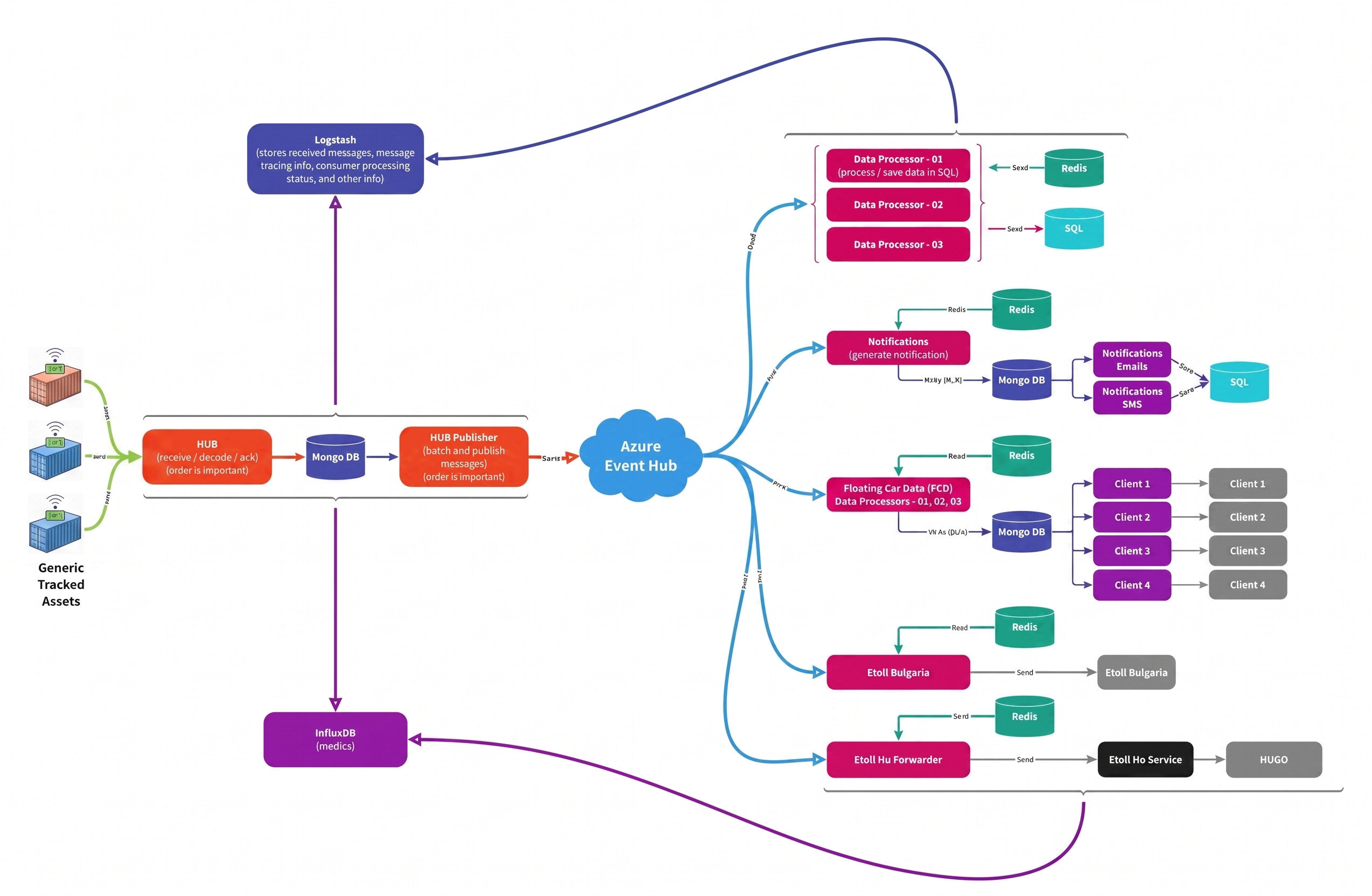
High-level infrastructure view: ingest, route, process, and deliver asset data.

TrackGPS high-level IoT Hub processing diagram
(c) 2026 TrackGPS by AROBS Processing Architecture
Ingestion, ordering, event routing, and service distribution
TrackGPS by AROBS
TrackGPS by AROBS
Confidential - For Discussion Purposes Only
07 / 15
Integration & Open Data

Existing IoT integration capabilities ready for enterprise delivery

Beyond device connectivity, TrackGPS already operates the ingestion, processing, normalization, and enterprise delivery layer required to turn field events into client-ready data.

Ordered Ingestion Receive, acknowledge, and control device event flow from the field layer.
Processing & Normalization Decode, enrich, route, and persist asset data into the existing platform backbone.
Enterprise Integration Deliver structured outputs through existing client-facing interfaces and service paths.
Portable Data Model Support reusable outputs across Coca-Cola and bottler-side environments.
What Already Exists Today

This is not a greenfield integration model.

TrackGPS already has the operational backend and service logic required to receive device-originated data, process it, and deliver it onward through enterprise integration paths.

.NET Full Framework ingestion and processing layer already used in production operations.
Existing HUB and IoT processing backbone for ordered message handling and downstream routing.
Established platform logic for normalization, persistence, mapping, and client-specific delivery.
Integrator model already positioned between device data capture and enterprise consumption systems.
Open Delivery Methods Already Supported

Client-facing integration interfaces are already part of the current operating model.

TrackGPS can adapt device and platform data into established enterprise delivery methods, making the output portable rather than locked into a single device ecosystem.

FTP File-based enterprise delivery for scheduled downstream consumption.
Kafka Streaming-oriented integration path for event-driven consumption models.
JSON APIs Structured service delivery for application-level integration and data exchange.
SOAP Connectivity Compatibility with enterprise systems still using service-based legacy interfaces.
TrackGPS Positioning TrackGPS acts as the orchestration layer between device-originated data and enterprise consumption systems, reducing integration risk while keeping the data model open and portable.
(c) 2026 TrackGPS by AROBS Integration & Open Data
Existing backend, enterprise interfaces, and portable client delivery model
TrackGPS by AROBS
TrackGPS by AROBS
Confidential - For Discussion Purposes Only
08 / 15
Device Option 1
Recovery Tag Device
7-year battery Small tag form factor Fast implementation

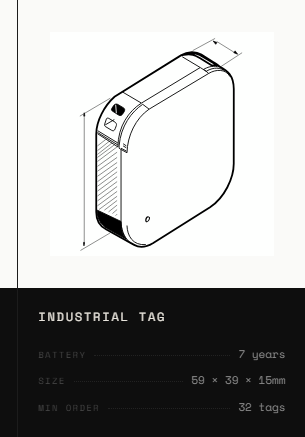
Recovery Tag Device

A compact tag device, similar in concept to an AirTag, designed for recovery-oriented asset visibility with long battery life and rapid deployment potential.

Connectivity Type Uses nearby Android and iOS phones to capture location events, then data is made available through the platform layer.
Estimated Battery Life Estimated battery life: 7 years.
Installation Guide Mounted with double tape in a protected area of the refrigerator.
Dimensions 59 x 39 x 15 mm.
Functionality Flow
Refrigerator + Tag Tag is attached in a protected mounting area
Nearby Phones Android and iOS devices detect the tag presence
Cloud Service Location data is collected through the ecosystem service layer
TrackGPS by AROBS Data is received, processed, and mapped inside the TrackGPS platform
Coca-Cola API Processed recovery data is sent onward via API
(c) 2026 TrackGPS by AROBS Device Option 1
Compact recovery-oriented tag device with ecosystem-assisted location flow
TrackGPS by AROBS
TrackGPS by AROBS
Confidential - For Discussion Purposes Only
09 / 15
Device Option 1

Decision view for the Recovery Tag Device

Commercial and operational view of the compact tag option, including deployment strengths, adoption risks, rollout timing, and cost structure.

Strengths & Weaknesses

Strengths

Fast implementation path with ready-to-use tag form factor.
Small device dimensions simplify protected placement on the refrigerator.
Long estimated battery life supports low-touch field operations.

Weaknesses

No true real-time data flow in the same sense as a cellular GPS device.
Location visibility depends on mobile devices being near the asset.
No motion detection, which means no real-time movement alert unless a new nearby phone creates a new position update.
Implementation Timeline
10 Working Days

Order and testing

Initial order placement, sample handling, and internal testing after agreement.

15 Working Days

Development and integration

Platform-side development and integration toward the Coca-Cola system interface.

10 Working Days

Shipment and activation

Product delivery, real activation, and installation execution in the field.

Cost Structure

Estimated total implementation timeline: 35 Working Days from agreement to shipment, activation, and installation readiness.

Hardware One-Time Fee Per-device acquisition cost for the recovery tag hardware.
Monthly Data / Platform Fee Recurring fee for the connected location data and platform access model.
100 Sample Devices Initial pilot batch structure for validation and first deployment wave.
1,000 and 10,000 Devices Volume-based commercial structure to be compared consistently against the other device options.
(c) 2026 TrackGPS by AROBS Device Option 1
Rollout considerations, delivery timing, and commercial structure
TrackGPS by AROBS
TrackGPS by AROBS
Confidential - For Discussion Purposes Only
10 / 15
Device Option 2
Asset Tracker AT1 Device
MVNO SIM connectivity Up to 4-year battery Existing GPS platform Integrated in TrackGPS IoT

Asset Tracker AT1 Device

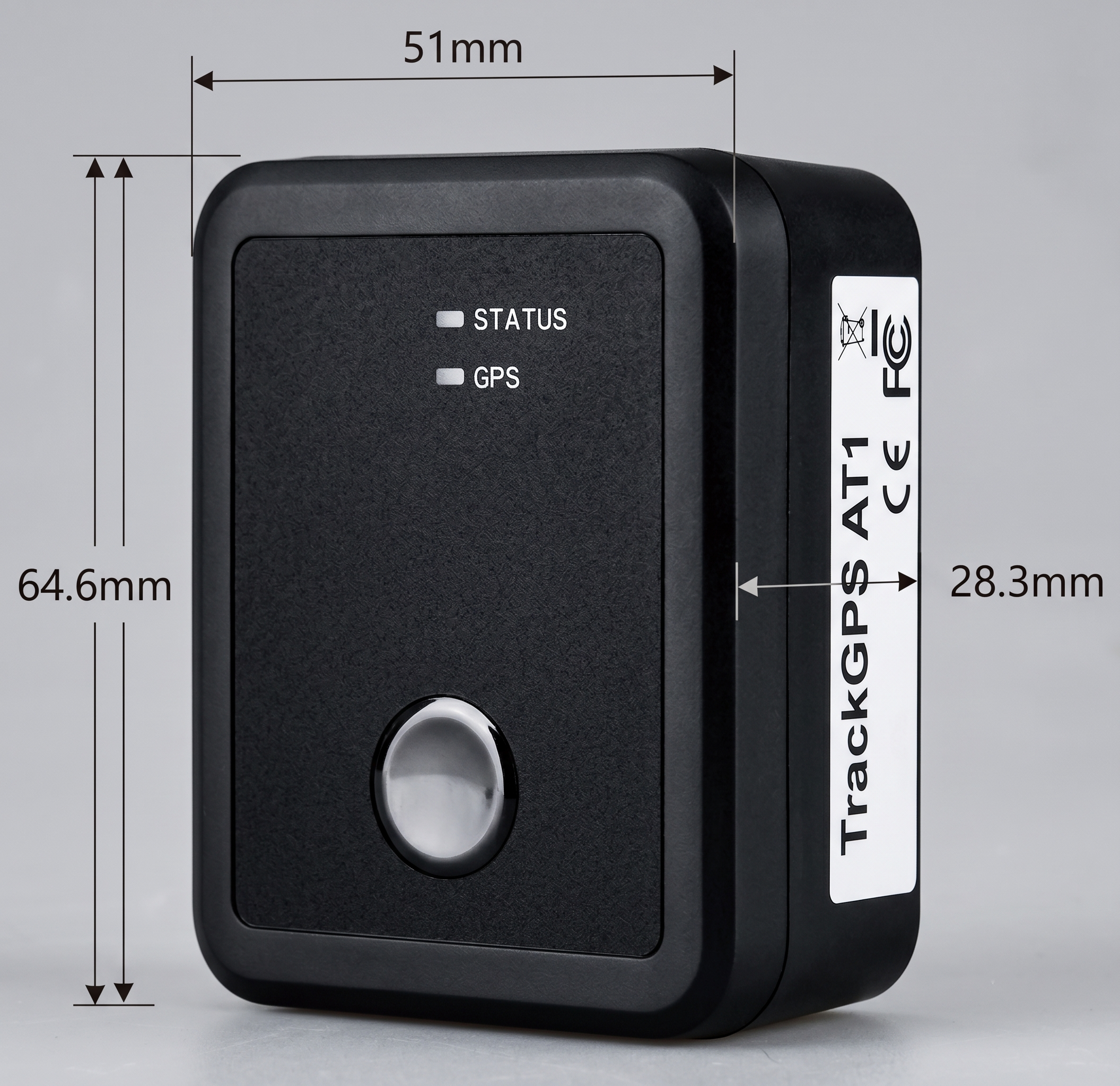
A compact existing GPS asset tracker designed for recovery-oriented deployments, with direct MVNO SIM connectivity and stronger control over data flow than phone-dependent tag solutions. eSIM-ready architecture can further reduce SIM-related physical failure points and improve long-term deployment flexibility. Indoor positioning can also fall back to LBS triangulation based on the available 4G or 2G GSM cell. This is an existing device integrated into the TrackGPS IoT system.

Connectivity Type MVNO SIM connectivity with direct GPS data transmission into the TrackGPS processing path.
Estimated Battery Life Up to 4 years, assuming GPS enabled and 1 coordinate per day.
Installation Guide Can be mounted with double tape in a protected area of the refrigerator, with optional magnet-based attachment.
Dimensions 64.6 × 51 × 28.3 mm.
Functionality Flow
Refrigerator + GPS Tracker Tracker is installed on the refrigerator as the recovery device
MVNO Network Device sends data through the MVNO SIM connectivity path
TrackGPS by AROBS Data is received into the TrackGPS server and routed into the IoT pipeline
IoT Hub + Processing Data is processed, normalized, and mapped inside the existing platform backbone
Coca-Cola Systems Processed recovery data is sent onward to Coca-Cola servers
(c) 2026 TrackGPS by AROBS Device Option 2
Existing GPS tracker with direct MVNO-based recovery data flow
TrackGPS by AROBS
TrackGPS by AROBS
Confidential - For Discussion Purposes Only
11 / 15
Device Option 2

Decision view for the Asset Tracker AT1 Device

Commercial and operational view of the existing GPS tracker option, including deployment strengths, practical trade-offs, rollout timing, and cost structure.

Strengths & Weaknesses

Strengths

Fast implementation using an existing device platform.
Direct MVNO SIM connectivity with no dependency on nearby mobile phones.
Indoor positioning can fall back to LBS triangulation based on available 4G or 2G GSM cell data.
Better control over data acquisition and delivery path.
Stronger fit for recovery use cases where asset movement needs more deterministic visibility.
Good battery management profile for a GPS tracker under low-frequency reporting logic.
Flexible mounting options with double tape and optional magnet attachment.
eSIM-ready architecture can further reduce SIM-related physical failure points and improve long-term deployment flexibility.

Weaknesses

Larger and more visible than a passive tag solution.
Battery autonomy depends on reporting profile, GPS fix quality, and field conditions.
Installation remains simple, but is more deliberate than a pure stick-on consumer-style tag.
Implementation Timeline
10 Working Days

Order and testing

Initial order placement, sample handling, and internal testing after agreement.

15 Working Days

Development and integration

Platform-side development and integration toward the Coca-Cola system interface.

10 Working Days

Shipment and activation

Product delivery, real activation, and installation execution in the field.

Cost Structure

Estimated total implementation timeline: 35 Working Days from agreement to shipment, activation, and installation readiness.

Hardware One-Time Fee Per-device acquisition cost for the GPS tracker hardware.
Monthly Data Connectivity Fee Recurring fee for the MVNO SIM connectivity and connected data flow.
100 Sample Devices Initial pilot batch structure for validation and first deployment wave.
1,000 and 10,000 Devices Volume-based commercial structure to be compared consistently against the other device options.
(c) 2026 TrackGPS by AROBS Device Option 2
Rollout considerations, battery trade-offs, and commercial structure
TrackGPS by AROBS
TrackGPS by AROBS
Confidential - For Discussion Purposes Only
12 / 15
Device Option 3
Compact Asset Tracker Device
Compact tracker form factor Up to 2-year battery Double-tape mounting Integrated in TrackGPS IoT

Compact Asset Tracker Device

A compact GPS asset tracker designed for recovery-oriented deployments where smaller device size is a priority, while maintaining direct tracker-based data delivery into the TrackGPS processing environment. Indoor positioning can also fall back to LBS triangulation based on the available 4G or 2G GSM cell. This is an existing device integrated into the TrackGPS IoT system.

Connectivity Type Tracker-based GPS data delivery with direct integration into the TrackGPS data path.
Estimated Battery Life Up to 2 years with GPS enabled.
Installation Guide Mounted with double tape only in a protected area of the refrigerator.
Dimensions 46.8 × 41.8 × 16.9 mm.
Functionality Flow
Refrigerator + GPS Tracker Compact recovery tracker is installed on the refrigerator
Connectivity Path Device sends tracker-based location data through the network path
TrackGPS by AROBS Data is received and routed into the TrackGPS server and platform layer
IoT Hub + Processing Data is processed, normalized, and mapped inside the existing processing backbone
Coca-Cola Systems Processed recovery data is delivered onward to Coca-Cola systems
(c) 2026 TrackGPS by AROBS Device Option 3
Smaller tracker footprint with shorter battery autonomy trade-off
TrackGPS by AROBS
TrackGPS by AROBS
Confidential - For Discussion Purposes Only
13 / 15
Device Option 3

Decision view for the Compact Asset Tracker Device

Commercial and operational view of the smaller tracker option, including mounting profile, battery trade-offs, rollout timing, and cost structure.

Strengths & Weaknesses

Strengths

Smaller dimensions than Device Option 2.
More discreet mounting footprint on the refrigerator.
Direct tracker-based data path without dependency on nearby phones.
Indoor positioning can fall back to LBS triangulation based on available 4G or 2G GSM cell data.
Good fit where compactness is more important than maximum battery duration.
Simple double-tape installation method.

Weaknesses

Lower battery autonomy than Device Option 2.
Double-tape-only mounting gives less installation flexibility.
Shorter battery life may lead to earlier service or replacement cycles.
Smaller size is a physical advantage, but it comes with an energy trade-off.
Implementation Timeline
10 Working Days

Order and testing

Initial order placement, sample handling, and internal testing after agreement.

15 Working Days

Development and integration

Platform-side development and integration toward the Coca-Cola system interface.

10 Working Days

Shipment and activation

Product delivery, real activation, and installation execution in the field.

Cost Structure

Estimated total implementation timeline: 35 Working Days from agreement to shipment, activation, and installation readiness.

Hardware One-Time Fee Per-device acquisition cost for the compact GPS tracker hardware.
Monthly Data Connectivity Fee Recurring fee for the connected data path supporting recovery visibility.
100 Sample Devices Initial pilot batch structure for validation and first deployment wave.
1,000 and 10,000 Devices Volume-based commercial structure to be compared consistently against the other device options.
(c) 2026 TrackGPS by AROBS Device Option 3
Compact form factor with shorter autonomy and simpler mounting model
TrackGPS by AROBS
TrackGPS by AROBS
Confidential - For Discussion Purposes Only
14 / 15
Device Option 4
Custom Build Concept
Custom Recovery Tracker TrackGPS-led concept tailored for the Coca-Cola recovery use case
4G / CAT M1 only
low-consumption architecture
eSIM supported
WiFi for better indoor positioning
BLE for future sensor expansion
Custom-built concept 5-year battery target Best-fit long-term option

Custom Recovery Tracker Device

A custom-built recovery tracker designed specifically for this project, combining long battery life, direct cellular data flow, and future-ready sensor expansion in a compact form factor. This is the solution we consider the strongest long-term fit for the use case.

Connectivity Type 4G / CAT M1 only, low-consumption architecture designed for direct tracker-based data delivery.
Estimated Battery Life 5-year target, with design direction toward 5-7+ years at 1 coordinate per day.
Battery Management Smart battery management algorithm intended to detect different asset operating states.
Dimensions Around 63 x 50 x 20 mm.
Indoor Positioning WiFi module supports better indoor positioning where GPS alone is less effective.
Future Sensor Path BLE module enables future refrigerator sensors such as temperature or open/closed state.
Functionality Flow
Refrigerator + Custom Tracker Custom-built tracker is installed as the project-specific recovery device
4G / MVNO Path Device sends data through a low-consumption direct cellular path
TrackGPS by AROBS Data is received and routed into the TrackGPS server and platform layer
IoT Hub + Processing Data is processed, mapped, and prepared for business use and future sensor logic
Coca-Cola Systems Processed recovery data is delivered onward to Coca-Cola systems
(c) 2026 TrackGPS by AROBS Device Option 4
Custom-built best-fit concept for long-term recovery and expansion
TrackGPS by AROBS
TrackGPS by AROBS
Confidential - For Discussion Purposes Only
15 / 15
Device Option 4

Decision view for the Custom Recovery Tracker Device

Commercial and strategic view of the custom-build option, positioned as the strongest long-term fit if the goal is best alignment with the recovery use case and future expansion.

Strengths & Weaknesses

Strengths

Strongest overall fit for the recovery business case.
Custom-built around project requirements rather than adapted from a generic product.
Low-consumption 4G / CAT M1 architecture with eSIM support.
Target battery life materially stronger than smaller tracker alternatives.
Smart battery management designed around different asset operating states.
WiFi support for better indoor positioning and BLE support for future sensor expansion.
Strongest long-term path if the project evolves beyond pure recovery.

Weaknesses

Longer lead time than existing off-the-shelf devices.
Productization effort is higher because this is a custom-build path.
CAT M1 only, which should be accepted intentionally as part of the connectivity architecture.
Implementation Timeline
Phase 1

Architecture alignment and design freeze

Confirm functional requirements, battery targets, communication logic, and mounting assumptions.

Phase 2

Prototype and integration build

Build and validate the custom tracker path, then connect it into the TrackGPS platform and Coca-Cola integration flow.

~3 Months

Pilot-ready delivery path

Estimated path to pilot-ready custom hardware and system validation is around three months from go-ahead.

Cost Structure

Estimated implementation path to pilot-ready delivery: approximately 3.5 months, reflecting custom development rather than an existing-device rollout.

Hardware One-Time Fee Custom hardware cost structure for the project-specific device build.
Monthly Data Connectivity Fee Recurring fee for connected data flow through the direct cellular architecture.
100 Sample Devices Custom-built pilot batch structure for validation and first deployment wave.
1,000 and 10,000 Devices Volume-based commercial structure for scaled rollout once the custom path is validated.